Category: Change Management

Change Management

Effective Delegation: An Underutilized Leadership Tool

Why Don’t Leaders Delegate More?


Let’s start by addressing why leaders often shy away from delegation. There are several reasons, including:


  1. The belief that they need to figure everything out first.
  2. Thinking they can do the job better and faster themselves.
  3. Past experiences where employees didn’t pick up tasks well.
  4. Fear of overwhelming employees.
  5. Concerns about the quality of work.
  6. Not having an Executive Assistant (EA) or support to delegate to.
  7. Not wanting to share credit or recognition.
  8. Feeling that as the leader, they should handle everything.


It’s important to recognize these reasons and understand that effective delegation can overcome these challenges and lead to better outcomes for both the leader and the team.


Benefits of Delegation


Now, let’s explore the benefits of effective delegation:


  1. Increased Productivity: Delegating tasks allows you to focus on higher-value activities and achieve more in less time.
  2. Employee Development: Delegating provides opportunities for employees to learn and grow, contributing to their long-term success and the overall succession plan.
  3. Stress Management: Delegating tasks can reduce stress and prevent burnout by sharing the workload.
  4. Leveraging Strengths: Delegating tasks outside of your expertise allows you to focus on what you do best, leading to better results.
  5. Improved Time-Management: Delegating helps you prioritize and manage your time more effectively, leading to better overall efficiency.
  6. Increased profitability: Delegating can lead to better decision-making and resource allocation, ultimately improving the bottom line.


How to Delegate Effectively


To delegate effectively, follow these steps:


  1. Clearly define the task or project you want to delegate.
  2. Explain why the task is important and what the ideal outcome looks like.
  3. Set clear expectations and success criteria for the delegated task.
  4. Provide support and resources to help the delegate succeed.
  5. Follow up regularly to monitor progress and provide feedback.
  6. Adjust your approach as needed to ensure success.


Get Your Free Delegation Tool

To help you delegate effectively, I’ve created a free PDF tool called “Transformational Leadership Delegation and Support.” Email me at rickh@ci4life.org to receive your copy. This tool will guide you through the delegation process and help you set clear expectations for your team.


Conclusion

In conclusion, effective delegation is a powerful leadership tool that can lead to increased productivity, employee development, and overall success. By understanding the benefits of delegation and following the steps outlined above, you can leverage your time, energy, and resources more effectively, leading to better outcomes for you and your team.


Here is a link to my Continuous Improvement 4 Life podcast with more details on this topic.

Change Management

Mastering the Ideal Operating Cadence for Small to Medium-Sized Businesses

Are you ready to optimize your business’s performance with a finely tuned operating cadence?


Today, we’ll explore the key components of a successful operating cadence for small to medium-sized businesses. From strategic planning to weekly meetings, we’ll guide you through the process of achieving better results in less time and with less stress for you and your leadership team.


Annual Business Planning:

Many businesses struggle with lengthy annual budget planning cycles that can last for months. To avoid this, create a tight timeline of 4 to 6 weeks to complete your business planning process. Define clear deliverables for each week and assign accountability to ensure progress. Treat the planning process like a project, with a focus on key strategies and assumptions about growth and core metrics.


Quarterly Reviews:

Quarterly reviews are crucial for tracking progress and adjusting strategies. These reviews should be in-depth and ideally last a full day or at least four hours. Start with a corporate review of key performance indicators (KPIs) to assess your progress against the annual plan. Then, set corporate priorities or “rocks” for the quarter to keep the team focused on the most important goals.


Monthly Business Reviews:

Monthly meetings should focus on accountability and learning. The monthly business reviews are not a problem-solving meeting. Each member of the senior team should report on their department’s KPIs, highlighting achievements and action plans. This bottom-up reporting approach ensures that everyone is clear on their accountabilities and has full ownership for performance. I recommend a 1-pager template with the following: 1 Lagging indicator, 2 leading indicators, highlights, and action plans. Email me at rheyland@gmail.com if you want a template for these powerful monthly meetings.


Weekly Check-Ins:

Please don’t just run your weekly meeting in an “issue of the day” format. Be strategic and focus on advancing your quarterly priorities and the subtasks to complete them. Weekly meetings should be concise and focused on progress towards the quarterly priorities or “rocks.” Use a template to track progress on each rock and assign accountability for next steps. These meetings should be one hour or less to keep the team focused and productive.


Key Tips for Success:

  • Assign clear roles for each meeting, including a chair, action taker, and timekeeper.
  • Stay disciplined and focused on the agenda to avoid wasting time.
  • Use templates and clear reporting structures to streamline the process and ensure everyone is on the same page.

By implementing this operating cadence, you can drive better results for your business while reducing stress and improving efficiency. Start by tightening your business planning process, then move on to quarterly, monthly, and weekly meetings to keep your team aligned and focused on achieving your goals.


Link to Podcast HERE.

Change Management

How I helped a client double his income and lose 30 pounds.

How I Helped a Client Double His Income and Lose 30 Pounds


  1. Identify Personal and Business Goals
    1. Lose 30 lbs.
    2. Double my income


  1. Track Leading Indicators to Accomplish Goals
    1. Weight loss: Exercise 6 days/week and consume less than 100 carbs/day
    2. Income: Number of leads, number of lunches with ideal partners (accountants)


  1. Bi-weekly Accountability Calls
    1. Report on Key Performance Indicators (KPIs)
    2. Review lessons learned
    3. Teach new principles


  1. Time and Stress Management Coaching
    1. Delegation
      1. Sell the team; set others up to win so you don’t have to do all the work.
    2. Prioritization
    3. Time blocking
    4. Stress management techniques
    5. Weekly planning


  1. Teach Sales Principles
    1. Top 20: Identify past or current clients to upsell or cross-sell (or get references or referrals from).
    2. Build Trust: Always do what is best for the client, even if it means making less money or missing quotas. You will “outsell” in the long run.
    3. Sell to Ideal Customer
      1. E.g., Accountant/lawyer partners
      2. Wealthy professionals
  • Develop all your material for them
  1. Fill the funnel: Have at least 3 lead generation activities (1. Top 20, 2. Partnerships, 3. Email or LinkedIn automation).
  2. Seek first to understand: Sales scripts – Introduction, diagnose, pitch, next steps.
  3. Closing Skills: Closing script – Best Practices
  4. Always add value or give value even during follow-up emails
  5. Build a list of ideas: videos, articles, brochures, sales 1-pager, references (written and video), success stories.
  1. Never let me see you sweat: Your quota is not their quota. It’s about them and their needs, not yours.
    1. Deadline selling: Let natural deadlines create urgency. Be the good guy, not the pressure guy.
    2. Confidence Selling: Never assume they are not interested until they tell you so. Assume you haven’t captured their needs/pain points or they are too busy. Make it easy to say yes.
      1. Sell Benefits to their pain points (not just product attributes)


Results in 12 months of Coaching

  1. Lost 34 pounds
  2. Doubled income to over $500K usd.

7 Steps to create a six figure Coaching and Consulting Business

7 Step Checklist to Create a Six-Figure Coaching/Consulting Business!


Without having 100K+ followers on

YouTube or Instagram.


  1. Validate
    1. Is there a business need?
      1. Market research
    2. Do people value your expertise?
      1. Feedback


  1. Business Plan
    1. Clear Value Proposition
      1. Who is your Avatar customer?
    2. Purpose – Your Why
    3. Marketing Plan
      1. Price
      2. Promotion
  • Products
  1. Distribution
  1. Funding needed?


  1. Business Logistics
    1. LLC
    2. Website
    3. Automation
      1. Email
      2. Products
  • Calendar


  1. Establish Your Authority
    1. Books
    2. Surveys
    3. Magazine Articles
    4. Social Media
      1. Facebook, YouTube, Instagram, TikTok
    5. Podcast
    6. TV


  1. Deliver Extreme Value
    1. Over deliver
    2. Change people’s lives


  1. Multiple Streams of Income
    1. Book
    2. Courses
    3. Products
    4. Tests/Assessments
    5. Coaching/Consulting


  1. Promote
    1. Referrals
    2. Online promotion
    3. Click funnels


7 Guiding Principles for Growth:


  1. Don’t Rush and Don’t Settle. Quality is more important than timeliness. I rushed to market with my first planner and it was a tough sell. I took my time and sought out customer and design expertise on the second version and it was a hit.


  1. Don’t Skip a Step (but you can work sequentially). You might be tempted to skip the planning process and move on to making your offer. I promise you it will cost you time and money later on.


  1. Bootstrapping Works (but not on your core offer). You don’t need to have the most expensive website or the most expensive microphone. Deliver quality without top expensive. For example, my first course was done by a video professional. My second course was done by me on my computer camera and was a bigger commercial success. They key was the content – not the picture.


  1. Over Deliver to your ideal customer. Every blog, every product, and every social media message speaks to your ideal customer. My most successful course was to millennials, and it was about their money. I knew exactly what 22- to 38-year-olds needed and worried about in their careers and with their financial security.


  1. Trust Building Online. The online business is unique in mass customer trust building. In Business-to-Business consulting/coaching, you deliver a pitch F2F. Then you need follow-up meetings to establish trust and close the deal. For online sales, you aren’t always 1-1 with your customers. So, everything you say and do online must build trust and deliver valuable insight to your ideal customer group.


  1. Current and Past Customers are the best source of Future Sales. This principle has proven accurate in both on-line sales and b2b consulting sales. Those who know you best are your best source of future sales.  Referrals from current or past satisfied customers short circuit the trust building and sales process.


  1. Use Experts to help you Grow. You might be tempted to try and do everything yourself and save money.  This will cost you money and credibility in the long-run. Find “the best” and most trustworthy people to help guide you through the 7 steps.  Find a website expert, a click funnel expert, a book editing expert etc.  All these experts can be found through your social networks or websites like guru.com. For example, I had a bestselling book inside of me but I was stuck in the writing process because I knew I wasn’t a good editor.  I hired a wonderful editor on Guru.com  (Marinanne Thompson) and the book took 80 days to write and finish.  Experts save you time and money in the long-run!


For more details, let’s talk and apply these principles to your business.

Set-up a free assessment call at http://www.ci4life.org


Rick


Rick Heyland is the President of CI4life (Continuous Improvement 4 Life). Since 2018, he has been coaching and consulting online to small businesses and millennials. He is the author of the best-selling book: “Live Your Purpose: A Step-By-Step Guide to Living Your Best Life.” Previously, he was the COO of the Americas (North and South America) for RLG International. RLG is a productivity improvement (continuous improvement) consulting company that works with all major corporations in the energy business and other resource sectors. Rick led RLG through 5x growth during his last 10 years with the firm. He Has a proven track record in helping companies grow!

Change ManagementPersonal Development

Live Your Best Life


Live Your Best Life


Everybody is seeking to be happy, fulfilled, and successful! I call that your “best life”. What that means for people can be quite different and personalized.


I don’t believe it comes from just a bucket list of things you want to do and places you want to see. This obviously can be part of your best life.


I don’t believe it necessarily has to do with being the richest, most popular or most powerful. We all know very unhappy popular, powerful, and rich people.


I don’t believe “best life” means that you are perfect with no mistakes or setbacks.


I believe being your ‘best self’ means that you were intentional and fully engaged in the process of enjoying life and learning from it.


Here is a model with detailed information for living your best life:


  1. Define your best life.
  2. Plan to live your best life.
  3. Enjoy the journey.


  1. Define your best life.


What exactly is my best life? For 30 years, starting with myself and then helping thousands of others, I have been advising people how to define their best life. This is what I’ve found. Research by end-of-life nurses and other experts tells us it is not about working more. People who are dying were interviewed and often say they wish they would have lived their best life, not the life somebody else expected them to live.


The Triple 7 personal purpose development process


I have synthesized the process into 7 questions and exercises over 7 days with 7 journal writing sessions. At the end of this process, you will have a 50-word (maximum) personal purpose statement to help you define your best life.


The process begins with this defining question and exercise: How do you want to be remembered? Imagine you are visiting your funeral. What do you want people to be saying about you? Journal what you would like them to say and then start planning and executing that plan each day.


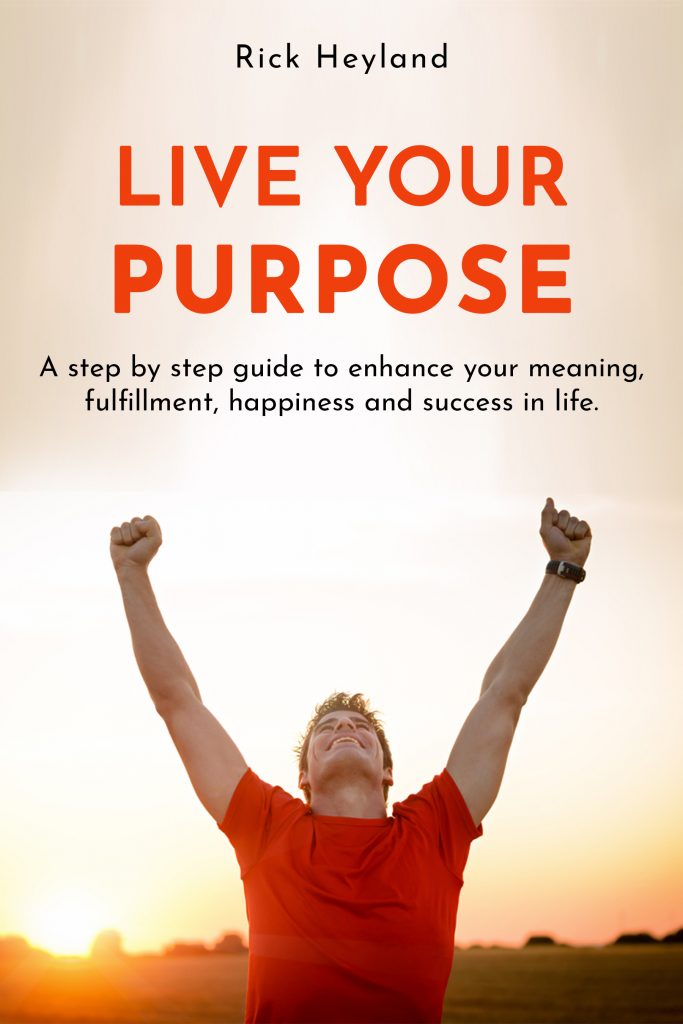
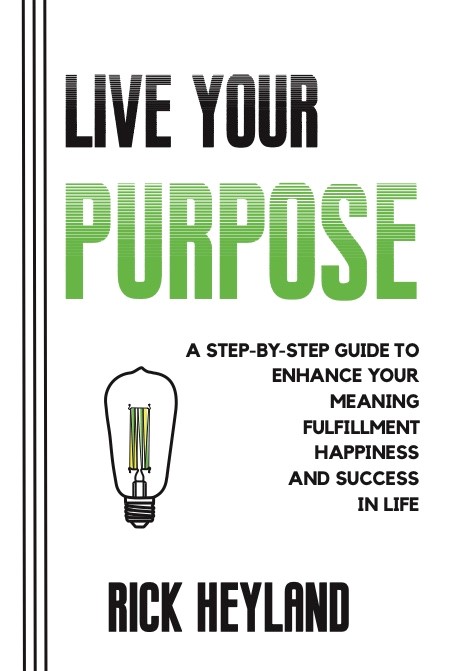
Chapter 4 of my book, “Live Your Purpose – A Step by Step Guide to Live Your Best Life”, shares the entire Triple 7 process. The book is sold on Amazon. Alternatively, you can go to my website, ci4life.org for more resources and methods to live your best life.


  1. Plan to live your best life.


Many people have big dreams for life but lack the skills or the right processes to help them successfully accomplish those dreams. Or, many people work so hard for retirement and then expect to be able to accomplish their dreams only to be robbed by sickness, health, and other changes. Plan to live your purpose starting today.


Identify goals that will help you accomplish your purpose


Research shows only 20% of people accomplish most of their goals. Why? I believe that the majority of reasons have to do with not knowing the right process and having the right skills to live on purpose and live their best life.


Here is the 7-step process for successful goal accomplishment:


  1. Identify all the areas you want to be successful in; e.g., health, relationships, work/finance, and spiritual/emotional well-being.
  2. Pinpoint Specific and Measurable goals to help you live your purpose.
  3. Make action plans to accomplish those goals.
  4. Track those goals.
  5. Have a weekly planning session to review past successes and learnings and to make new plans.
  6. Establish Daily prioritized planning to accomplish those goals.
  7. Share this process and the results with a trusted advisor on a monthly basis.


How can you accomplish 80% of your goals? Identify what your purpose is and then develop this goal-setting process. Be prepared to be amazed!


  1. Enjoy the journey.


This may be the most important step in the entire process to living your best life. Real joy and happiness come from the process and the journey – not the arrival. I have heard people say, “When I graduate or when I get out of debt, then I can be happy.” Or, “When I lose 25 lbs. or when I go to Bali or when my son graduates…then I can be happy.”


I have known a Pilipino family for years that works very hard each and every day and doesn’t have a lot of extra money. What extra money they do have, they send home to their family back in the Philippines. They are the kindest, most respectable, and happy people I know.


Are you just born with this skill set to be happy, given any circumstance, or can it be learned?


I believe everything can be learned with the right mindset, skill set, and tool set. We may not be able to throw a touchdown pass like Tom Brady or drive a golf ball like Dustin Johnson, but with the right mindset, skill set and tool set, we can get better and develop any skill. We may not be able to be as content and happy as my Philippine friends, naturally, but with the right mindset, skill set, and tool set, we can improve.


What is the right mindset, skill set and tool set for enjoying the journey?


  1. Gratitude may not solve all your problems, but it is the first thing that needs to happen in order to get your mind right to learn and improve and live your best life. What happens if you are not naturally a grateful person? What happens if your brain focuses on what you don’t have versus what you do have? Start with developing the skill of gratitude. It is like any skill set; it can be learned and developed. I developed a CI4life planner to help people develop this skill. On every planning page, it has space for gratitude lists. Start each day with writing down what went right and what you are grateful for. After you have finished your gratitude list, you will have the right mindset to learn and plan to live your best life every day!
  2. Stay Present and Mindful. Have you ever gone through a day or week or year and it was just a blur because it was so hectic, busy or stressful? So have I. This is not the best situation or state of consciousness to live your best life. We get confused into thinking that busy is “best life”. That is not true. Being able to enjoy each day and be aware of your feelings and moments is how to respond and live your best life. Meditation is such a critical skill for you to stay present. Stop your mind from racing ahead or behind/past. Train your brain to enjoy the journey of each day through stillness and meditation.
  3. Learn from Mistakes. Along the path to your best life, you will still make mistakes, have heartaches, and setbacks. The key is to have the right mindset and realize that this is part of the journey. Have a learning mindset about your setbacks. What am I supposed to learn from this as I progress? You have a choice when trials happen. You can let your mind get discouraged or give-up or get mad. Or, you can take the mindset of a learner. What am I supposed to learn from this as I progress toward my best life? The latter mindset is way more fun, enjoyable, and fruitful. What can you do if you get stuck in a downward spiral after a setback? Get help. Ask a trusted advisor for guidance. Read a book or watch a YouTube video that gets you pumped up and back to the learning mindset.


How well are you doing at developing and living your best life? Where are you on the continuum? What do you need to do to take the next step in your happiness, fulfillment, and success?


1st step to Living your best life:  Take this 3-minute calculator quiz to determine your score and your next steps here.


Good luck on your journey. Enjoy it and you will look back on a fruitful life knowing that you did the best you could. It’s an incredible feeling of peace and contentment to know that you were intentional in executing your best life.


Rick Heyland

Ci4life


Change Management

We need more focus on emotional and meaning quotient at home and work

The January 2013 McKinsey Quarterly publication posted an article by Susie Cranston and Scott Keller called,Increasing the Meaning Quotient of Work. They argued that the most successful and best performing people have IQ (intellectual quotient), EQ (emotional quotient), and MQ (meaning quotient). 

“While IQ and EQ are absolutely necessary to create the conditions for peak performance, they are far from sufficient, the authors said. (When a business environment MQ is low, employees put less energy into their work and see it as (just a job) that gives them little more than a paycheck.

Executives interviewed in the study said that when employees and teams have IQ, EQ, and MQ, they are five times more productive. Furthermore, when asked to locate the bottlenecks to peak performance in organizations, more than 90% of them chose MQ related issues.

Let’s compare these findings with a survey I’m conducting on my website, www.ci4life.org, where so far, almost 1,400 respondents have completed it. The survey’s aim is to identify the habits and characteristics of the happiest and most effective people. You may find the parallels interesting.

Overall outcomes of the survey

My premise has always been that it is happiness – not productivity – that leads to a life of success. The survey identifies key findings, key outcomes, key characteristics, and the key habits for this group cohort. Here are the findings so far on those identified as happier people:

  • Personal productivity: 14% higher
  • Effective relationships at work: 20% higher
  • Job satisfaction: 45% overall
  • Income: Double for the happier group

It’s important to note that the data is suggesting that the happiest group earn more income, but that not more money means more happiness. It’s the characteristics and habits of the happiest that lead to more income – not the other way around.

This brings us to the next question: How and why does this happiness, productivity, and satisfaction happen? Let’s break it down.

What are the characteristics of the happiest people?

I only mention a characteristic if it is a majority vote and if it is at least 25% greater than the comparison group:

  • Forgive and let go: 43% higher
  • Life purpose: 34% higher
  • Let go of discouraging events more effectively: 45% better
  • Content with life: 78% higher

For example: On the key question of comparing the very happiest to the below average in happiness, we find:

Seventy-eight percent of the happiest people have a life purpose, and the gap between the below-average happiness group is 34%. So, this means that the majority of the (above average) happiest people practice it, and this is greater than a 25% difference with the below-happiness group.

Personal habits of the happiest people

The same variable applies as above (a majority vote and if it is at least 25% greater than the comparison group of below-happiness people).

The personal habits of the happiest are as follows:

  • Regular exercise: 27% higher
  • Daily planning: 30%
  • Reading for personal improvement: 27%
  • Regular service to others: 26%
  • Financial savings: 32%

All of the characteristics of purpose, forgiveness, letting go, and contentment are what the McKinsey article highlighted – emotional and meaning quotient items!

What can we learn from these findings and what should we do?

On a personal level:

  1. Understand that it’s a combination of habits that contribute to higher levels of happiness and improved life outcomes. It’s not just one habit.
  2. Pick one of these habits to start improving on. Set a goal, track it, share it, and improve it.

On an organizational level:

  1. We need more emphasis on an emotional and meaning quotient in personal development if you want employees with higher job satisfaction and effectiveness. More training and development in both areas is essential for businesses.

Let me share with you two application ideas for businesses.

  1. Leaders, when you pitch your vision, make sure you share the why. Make sure and share how this creates meaning to your employees and your community.

For example: 

My very first client as a young consultant was a sawmill supervisor named Greg. He was a great athlete and loved to compete and win. He and I spent a few night shifts at the plant trying to figure out how to advance performance there. Greg had worked at the plant for over 30 years and had advanced from supervisor to superintendent to plant manager. That plant went on to be one of the top performing sawmills of its category in North America. He did at least two things that were extraordinary: (1) He always had employee and management meetings. (2) He rarely skipped a weekly employee meeting and his monthly management business review in all those 30 plus years. Talk about consistency!

Everybody is always trying to create some stability and sustainability for performance in their business. Try learning this lesson from Greg. Never skip a performance review and business discussion. Become a great communicator on multiple levels of meaning (MQ). Greg talked to his employees about things that would draw them into the business and care about its performance. He shared the details of financial and production performance to the union employees on a weekly basis. As a result, the plant took great pride and meaning in trying to become the best sawmill. He tied in customer feedback into his meetings. He shared the good and the bad. He built pride, meaning, and loyalty to the site. I think it was one of the reasons he never left despite being offered other positions at other plants. My favorite line he ever said was in a weekly employee meeting when he passionately shared with his employees that they don’t just make lumber. They provided shelter for those less fortunate and he would talk about progress with the Habitat for Humanity project in the local town that the company donated to. He talked about how their product helped people live their dreams of being a homeowner. Greg established a culture of meaning and pride by connecting the company’s product to how it benefited society, the customers, and themselves.

  • Hire leaders with emotional intelligence. At RLG International, we do a lot of work with capital projects. All of our research including within the benchmarking firms called IPA (Independent Project Analysis) suggest we need more leaders with emotional intelligence to lead our large mega capital projects.  The track record for mega construction projects is not good. Research is pointing to the difference leadership makes, and particularly leaders who have emotional intelligence – those who are open and listening to all stakeholders’ concerns. Some of these senior project directors are running projects with 20-40 billion-dollar budgets. They have thousands of contractors working the projects. 

In one IPA study of 56 mega capital projects, only seven of the projects met project goals.  Of the seven key characteristics listed in those projects was great leadership. One of the key characteristics of great leadership was emotional intelligence. You can imagine when you’re working with seven to 12 different organizations and thousands of employees how much emotional intelligence weighs in. You have to be able to listen to various concerns and worries and deal with it in a mature and open way. But I know there are applications to all sectors and business, not just capital projects. The truth though is that we need more leaders from all facets of business with emotional intelligence.

I hope this has given you a few ideas on what you can do to work on your personal and professional meaning quotient and emotional quotient. Thank you to all of the respondents, and I’d love to get to 1,500 respondents and beyond. If you value this knowledge, please go to the website and fill out the survey. So far, the respondents have shared that taking the survey has given them ideas for their own personal development journeys.

Additionally, on September 15, 2020, my book, Live Your Purpose – A Step-By-Step Guide to Enhance Your Meaning, Purpose, Fulfillment, And Happiness will be online for sale at Amazon.com. Please go to my website to subscribe, and I’ll send you a link to download the book for free.

Until next time, live a life of sustainable Continuous Improvement.

Planning for Peak Experiences

Peak experiences are events that compel us towards success and help us reach self-actualization.

Abraham Maslow describes peak experiences as such:

“The conviction that something extremely important and valuable had happened, so that the subject was to some extent transformed and strengthened even in his daily life by such experiences.”

Abraham Maslow

What Is Self-Actualization?

In 1943, psychologist Abraham Maslow identified the now-famous Maslow’s hierarchy of needs. Maslow argued that beyond our basic needs of food, water, and shelter, our highest need is self-actualization. 

Maslow describes self-actualization as; “What a man can be, he must be, the highest-order motivations, which drive us to realize our true potential and achieve our ideal self. Purpose and compelling goals drive us to our true potential and our ideal self.  According to Maslow, one characterization of self-actualization is having frequent peak experiences.

Maslow describes a peak experience as involving:

  • Feelings of limitless horizons opening up to the vision.
  • The feeling of being simultaneously more powerful and also more helpless than one ever was before.
  • The feeling of ecstasy and wonder and awe.
  • The loss of placement in time and space.
  • The conviction that something extremely important and valuable had happened, so that the subject was to some extent transformed and strengthened, even in his daily life by such experiences.

Sign me up for that! But how? How can we have frequent and intentional peak experiences?

Having a compelling purpose and compelling goals can help you have peak experiences and be self-actualized. Just like Chris Hadfield.

Becoming One of the First Canadian Astronauts

Chris Hadfield is a retired astronaut and was the first Canadian Commander of the International Space Station. When Chris was 9 years old, he watched Neil Armstrong and Buzz Aldrin taking the first steps on the moon. At that moment, Chris set a goal to go to the moon. Everything he did in life was focused on achieving that compelling goal. 

As an early teenager, Chris joined the air cadets. After high school, he mapped out a plan to beat the odds and become an astronaut, but at the time, Canada didn’t even have a space program. Chris decided that becoming a fighter pilot and a test pilot would be the best path towards becoming an astronaut. So against all the odds, he made the fighter pilot program and strived daily to be the best he could be.

Years later, Chris saw an ad in the paper saying that Canada was taking applications for an astronaut program. He was among thousands of applicants for two available positions. Chris went on to be the space station leader for several months in 2012, and the first Canadian to walk in space. He also sang David Bowie’s (Space Oddity) from space, which quickly went viral with over 75 million hits. 

Chris’s entire life was focused on a compelling goal. Interesting to note is that his dream was to walk on the moon, but people haven’t been to the moon since 1972. 

Was it a failure that Chris didn’t accomplish his life’s goal? No, because he has spent more time in space than most any other person. Look where his compelling goal made him reach and stretch to. 

In 2019, I did a podcast with Chris on my Continuous Improvement 4 Life channel. Chris’s life is inspiring, and he’s accomplished so much because of a dream, because of a compelling goal. He is an author of 3 books, including An Astronaut’s Guide to Life on Earth. Chris was named the top test pilot in both the US Air Force and the US Navy and was inducted into Canada’s Aviation Hall of Fame.

Chris shared a great revelation on the podcast,(We are not algae, we are not born under a rock, we are growing, learning beings that strive to become better and drive for continuous improvement towards worthy goals every day. Wow, if that doesn’t jack you up, what will? Chris Hadfield knows what it is to be self-actualized because of a compelling goal. The same goes for my former neighbor, Mike Schlappi.

Shot Happens

Mike was accidentally shot by his best friend when he was 15 years old. Mike was no longer able to play the sports he was so passionate about. He lost his legs, the ability to play sports, and his girlfriend due to the accident. As a teenager, Mike seemed to have lost his entire world. Mike talks about a few months later as he was starting to settle into life in a wheelchair, and then one day in the gym, he challenged his gym teacher to an arm-wrestling contest. Mike broke his arm as a result. So now he was stuck with permanent loss of his legs and temporary loss of his arm. He only had use of one limb, which resulted in a lot of circles in his wheelchair for a few days. 

One day, someone introduced Mike to wheelchair basketball, and he loved it. Playing basketball in the Olympics and representing his country soon became Mike’s compelling goal. 

After thousands of hours of practice and games, Mike represented Team USA in four Olympic Games, playing wheelchair basketball. He won two gold medals and two bronze medals. Mike later played for and now coaches the Utah Wheelin’ Jazz basketball team, who compete nationally as a member of the National Wheelchair Basketball Association (NWBA). 

I’ve known Mike for many years now, and I’ve never seen him without a smile and a positive attitude about life. What impresses me more than the Olympic medals is how Mike conducts his life. He has overcome so many setbacks in life, including an unexpected divorce. Today, with his wife Tami, Mike lives a fulfilling life as a speaker, Wheelin’ Jazz Coach, parent and grandparent, and a faithful member of the community and church.

Mike takes his dog, Kitty, for walks almost every day with a smile on his face. When he was in the hospital as a teenager, he complained to his mom about being shot and the awful hospital food. His mom looked him in the eye and said, (Mike, don’t be a crappy Schlappi, be a happy Schlappi.

His mom’s advice has stuck with Mike to this day. He tells me he does have down days; everyone does. I have seen Mike accomplish 3 compelling goals in his life: winning 4 olympic medals, building an amazing marriage with Tami (Tami has also overcome the death of her first husband to cancer and is an accomplished and compassionate person with a great attitude on life), and becoming a self-actualized Happy Schlappi! 

Listen to my podcast with Mike here.

Achieving Peak Experiences Through Planning

Peak experiences don’t happen by accident. They need to be planned and prepared for. Chris Hadfield used his downtime to build competency and earn more certifications to be prepared for his many peak experiences. Mike took what he was given and ran (rode) with it. 

Do you want more feelings that something significant and valuable has happened so that you’re transformed and strengthened? Start with this application exercise:

What peak experiences do you want to plan for?

In the next blog, we’ll discuss how to set compelling yearly goals to accomplish more peak experiences.

If you want to read more, you can order Mike Schlappi’s book, Shot Happens, and Chris Hadfield’s book, An Astronaut’s Guide to Life on Earth. And if you’d like coaching on planning and achieving more peak experiences, sign up for a free coaching session.

Thriving During Undesirable Change (Like COVID-19)

“The secret of change is to focus all your energy not on fighting the old, but on building the new.”

Dan Millman

For the past few months, we have been dealing with change in one way or another. I recently talked with three different people who were dealing with big, unexpected changes in their life. Today I’m going to share those stories and strategies that help us walk through change and thrive in uncertainty. 

I was coaching a COO as he was preparing for a big off-site meeting with his senior team. He had just reported to his investor group his quarterly earnings, and his revenue was down due to COVID-19. He was brainstorming how to get back on track. Together, we strategized about ways to help his team move forward despite the disruptions.

I was also coaching a CFO of a small start-up. He was in the process of selling his shares and moving to another company. The share evaluation came in lower than expected. He felt betrayed and at a loss of what to do.

I was having a conversation with my 85-year-old father recently. My parents were doing quite well through COVID-19. My brother and his wife were visiting and bringing the necessary supplies that would allow our parents to stay safe in isolation. 

My parents are missing regular human interactions, but are doing quite well with all things considered. Unfortunately, in the last three weeks, my father experienced significant, undiagnosed chronic pain in his knee and foot. He started using a walker, and his steps were slow and gated for the first time in his life. He was struggling to deal with the change.

What do these stories have in common? They’re all stories of transition and change. Most of us are experiencing significant changes personally and professionally during this pandemic.

Responding to Unexpected Change

What is the best way to respond to unwanted and unexpected changes in our life?

Some of us spend a lot of energy focusing on what we have lost. Of course, we all need time to vent and mourn our losses. But after the mourning, after the venting, what’s the best strategy to deal with unwanted or undesired change?

Is the best strategy to work harder? Is the best approach to meditate more? Is the best strategy to connect more with others? Should I exercise more? Should I give my team a big pep talk?  

All these suggestions are helpful, but how do I truly move on?

I love the Dan Millman quote I included at the beginning of the article. The best use of our energy is not to focus on the pains of change, or blaming the boss, your employees, the doctors, or God for the change. It might feel better in the short-term to complain or confess the sins of somebody else, but that won’t help you move forward. 

The best use of our energy is building something new. But how?  

The first step to moving forward is to accept the change.

Accept, Connect, Take Action

I highly recommend Russ Harris’s book, The Happiness Trap. He has some great tips to stop struggling with change and to start living. Russ shares,

“Once you acknowledged a story, that’s it—just let it be. You do not have to challenge it or push it away, nor do you have to give it much attention. Simply let it come and go as it pleases, while you channel your energy into doing something you value.”

The formula for effective change is:

  1. Accept
  2. Connect to your values
  3. Take appropriate action

When we have a challenging or negative thought, Dr. Russ recommends asking, “Is this thought helpful? Does it help me take action to create the life I want? If it’s helpful, pay attention; if it’s not, defuse it.”

How does this apply to a business that’s suffering from the pandemic?

The first step is accepting that the pandemic happened, and there are long-term changes associated with it. One of the saddest things I hear leaders say is, “I can hardly wait until the pandemic is over. Then I can fix my budgets, sales will go back to normal, and I’ll start hitting my goals.” Or individuals who say, “I can hardly wait until the pandemic is over, then I can finally be more successful, lose weight, and start working on my goals again.”

Some of the effects of COVID-19 are here to stay. If you’re waiting for things to get back to how they used to be, you’ll be waiting a long time.

With the COO I mentioned above, we discussed an approach that allows his team to vent about the effects that the pandemic was causing on their sales. After that exercise, he coached his team to move on. 

Then he asked questions like, How will this pandemic change business forever? How do we stay in front of those changes? How do we adapt faster than our competition? If our clients won’t meet with us in person, how do we become the best remote sales team in the world? How would the best remote sales team do things differently now?)

These types of questions and exercises helped the team move forward and make new plans rather than waiting for things to return to normal.

How does this apply to undesirable personal changes?

Accept the change. Try to observe what is happening, be an observer of your own story in your head. After a day of venting and a night of sleep, approach the change with a new mindset.  Accept what is. Find the learnings. Develop some small steps that will help you try new ideas to cope with the new reality. 

The CFO mentioned above, the one who felt betrayed by a low share evaluation did vent for a day or two. He got over the personal hurt and started focusing on the facts. He disassociated with the personal loss or any personal slight he might have felt and negotiated based on his values of integrity, honesty, and fairness. 

He shared the updated evaluation data with the other owners. He tried not to make it personal and eventually received an improved evaluation and an eye-opening lesson on change. If he held on to the feelings of betrayal, he wouldn’t have had the peace of mind to negotiate based on his value system rather than anger or hate.

My dad is also doing better. He kept trying new things to fix his leg. He came to grips with the idea that this may be here to stay. He got more comfortable with others helping and serving him (which is not an easy change). Eventually, they did find the cure, and the pain has subsided.

Change is hard, no question about it. Having a plan can help tremendously. Remember to take things one step at a time:

  1. Mourn the change and move on
  2. Accept the change
  3. Connect to your values on how you want to show up through the change
  4. Develop small steps each day to deal with the new reality

Develop your plan to deal with change. Be ready to spend your energy on the new. I believe there are always new opportunities to build something new and thrive in business and life.

If you want to learn more, set up a coaching session with me.


What Is the Most Important Habit?

Every year, people set out to reach new goals—earn more money, lose weight, grow their business, and more. I’ve found that the best way to achieve your goals is by committing to a new healthy habit. 

By definition, a habit is a regular tendency that’s difficult to give up. 

When you create healthy habits that are difficult to give up, you will inevitably get closer to achieving your bigger goals. 

Today, I’m going to talk about the most important habits that you can start doing daily. 

Are hard work and exercise the most important habits?

There is a good argument to be said that regular exercise is the most important habit. Charles Duhigg, author of The Power of Habit, calls exercise the keystone habit. 

I agree that exercise is a cornerstone habit that leads to a better life. Even for a few minutes every day, a habit of exercise is a guaranteed way to become healthier and stay healthy.

On a similar note, people might argue that the best habit is hard work.

James Cash Penney, better known as the founder of JCPenney, once said,

“Unless you are willing to drench yourself in your work beyond the capacity of the average man, you are just not cut out for positions at the top.

No doubt, being diligent is a crucial attribute for success and happiness.

The most important habit: planning your day

I would argue that making a plan, specifically, a daily plan is the most important habit. 

In 2019, I wanted to find out the characteristics of the most happy and productive people. I surveyed 500 people from across the globe. The results showed that 70% of those who said they were the happiest also said they had a habit of daily planning.

I’ve found that 15 minutes in the morning and evening to plan and review set up all other daily habits. It’s during the quiet planning time of the morning and evening that you plan your exercise, work, and all your other good and worthwhile activities of the day.

The ancient philosophers called the Stoics emphasized the importance of morning planning.

Marcus Aurelius proposes to remind yourself in the morning (of what a precious privilege it is to be alive, to breathe, to think, to enjoy, to love.

Epictetus advises to rehearse the day in the morning, and then review your progress in the evening. 

Here’s a four-minute video explaining the Stoic morning routine of looking inward, examining ourselves, and reflecting.

At daybreak, we should ask ourselves a few questions:

  • What do I still lack in order to achieve freedom from negative emotions?
  • What do I need to achieve tranquility?
  • What am I?, A rational being.   

The purpose of this daily routine is to get better and step towards our goals every day.

I found that a morning planning meeting with yourself can turbo boost your day. When you get off to a good start to your day, the rest of the day will follow suit. 

Waking up early to conduct your morning planning is essential because it’s quiet, you can be still and free from interruptions. Early mornings are a time where you can connect to your soul and listen without worrying about the business of life.

What should my morning planning meeting look like?

  1. Start with gratitude. Use your phone or a journal to list the things you’re grateful for in that moment and yesterday. This is a great way to start your day with positivity!
  2. Build your to-do list and calendarize it. Write your list in chronological order (as much as possible). A to-do list helps visualize the activities and helps with last-minute planning for each activity.
  3. Mentally prepare for how you want to show up. Build an intention for the day. How do you want to show up for your spouse/partner and kids? How do you want to show up under challenging decisions or issues at work? A morning meditation practice is a great way to prepare for the day ahead mentally.
  4. After your planning session, start your renewal activities. Build your emotional and physical capacity by planning and completing your exercise and spiritual practices. There are so many positive endorphins from morning exercise. Research shows that after exercising, you are highly productive for the next few hours. The spiritual/emotional activities after the planning session increase your emotional capacity. This is a time to set an intention for the day. Yoga, meditation, prayer, and scripture study are terrific habits to practice in the morning.

What should my evening review look like?

  1. Start building your gratitude list for the day. Gratitude allows you to not focus on the one thing that went wrong and train the brain to focus on what went right. The other day I had 18 things to do on a Sunday. I accomplished 17 things and didn’t accomplish my last goal of not eating sugar after 8 p.m. As I sat down for evening planning and preparation, I found myself focused on the one thing that went wrong. Has that ever happened to you? After my gratitude exercise, my mind started to focus on the 17 things I accomplished. The evening went so much better when I focused on what went right.
  2. Review what you learned. What did I learn today? What did I do well today? What can I do better? Write the answers to these questions down. I love thinking about what I learned each day. Many of my blog posts and podcasts come from my daily learnings.
  3. Practice acceptance. Acceptance of reality is a key that unlocks happiness. You can plan out your whole day, but usually it won’t go exactly how you’ve planned. Expressing gratitude for what went well, and accepting what didn’t go as planned is an attitude that leads to happiness. You will face success and blessings, along with disappointments and discouragement. We need to accept it all! I found a thoughtful article on acceptance from a psychotherapist and wellness writer, Megan Bruneau.

    “No one is suggesting you like, want, or support whatever it is that you’re accepting. But by struggling against the pain—by resisting and rejecting it—we create undue suffering. It doesn’t mean that you’ve chosen or endorse what you’re accepting. It doesn’t mean you like your anxiety, want your chronic pain, would choose your body, or support an injustice that’s happened to you or someone else. Rather, you’re choosing to allow it to be there when you can’t change it in that moment. To make space for it. To give yourself permission to be as you are, feel what you feel, or have experienced what you’ve experienced without creating unproductive shame or anxiety. The pain might still be there, but some of the suffering will be alleviated. Megan Bruneau, M.A.

  1. Start your to-do list for tomorrow. Get a head start on tomorrow’s plan. Carry over the items that you didn’t get done from today but start with the same physical, spiritual, and emotional practices right after your planning session.
  2. Finish your daily review with a short meditation session to relax your mind and prepare for sleep.

Performing these daily practices will help you to look forward to the sessions to reflect and learn. You will find an enormous amount of joy from checking off the items on your to-do list. I’m slightly embarrassed to admit how much I love checking things off my list.

When you build and maintain the discipline to plan every morning and every day you will accomplish your wildest dreams and aspirations. Step by step, you will be creating a practice of progress that becomes very self-reinforcing.

A Word of Advice

Remember to be patient with yourself, others and issues that throw off your plan. Relationships always take precedence over tasks. Be intentional in building relationships and connections as part of your daily routine! 

It’s an incredible feeling of productivity and success to be a good daily planner. I believe that daily planning is the most important habit for sustainable happiness and success!

If I can help you get on the right path for these kinds of practices, schedule a free call. And head over to Continuous Improvement 4 Life to find tools designed to help you accomplish your planning and goals.

Subscribe to my website and future blogs here.


Subscribe

* indicates required


0
    0
    Your Cart
    Your cart is emptyReturn to Shop